Autumn 2025

Summer 2025

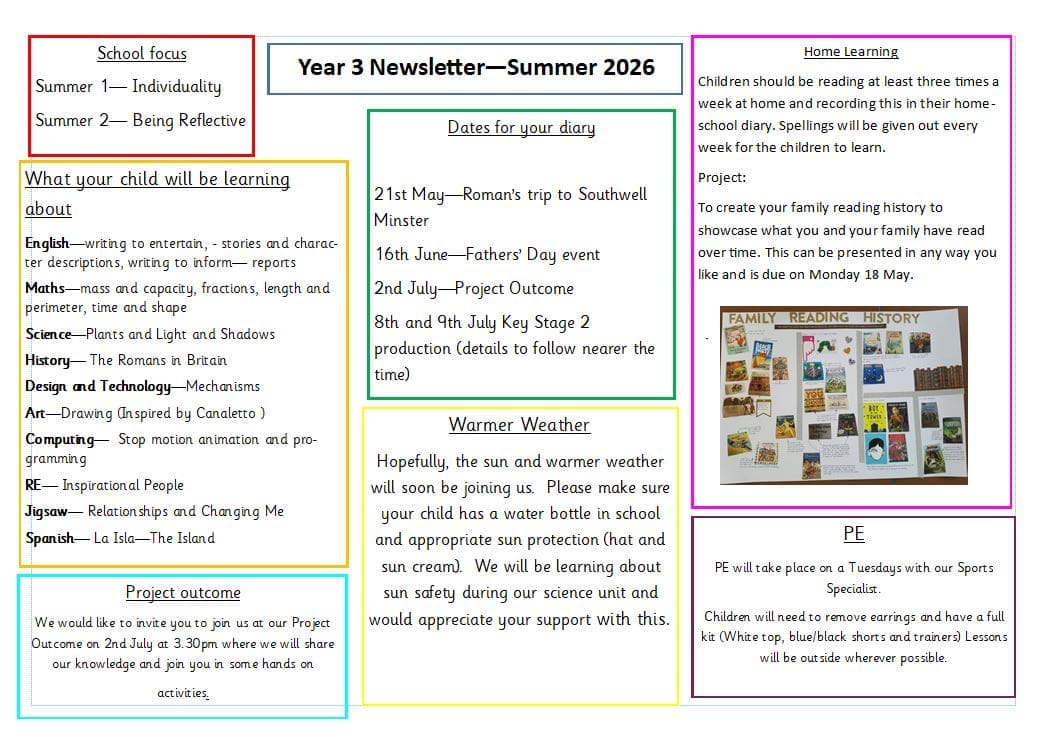
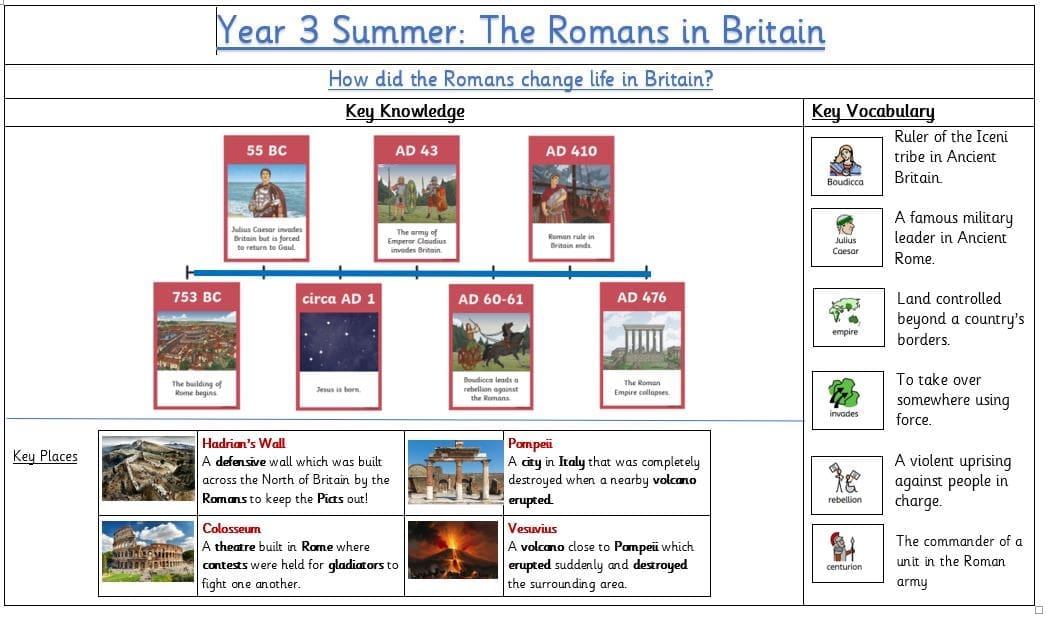
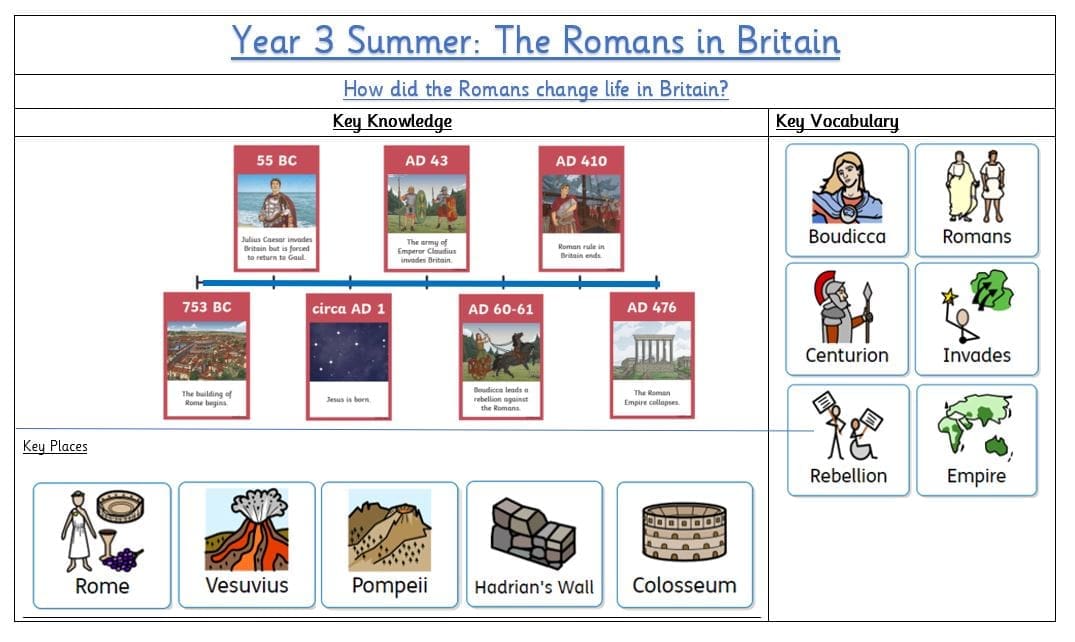
History

To launch our Romans topic we explored an aspect of Roman art work – mosaic.  We used strips of paper to decorate our initials in this style.  We have been considering the Roman legacy in Britain.  We were amazed to discovered that it was the Romans who taught us how to make glass into shapes like bowls and glasses.  We enjoyed exploring some artefacts to see what else we could learn about the time period and learnt more about how to use primary   and secondary sources to learn about the past.  We used quotes from Caesar (a primary source) and explanation texts (a secondary source) to answer the enquiry question “What kind of a person was Julius Caesar?”

On our Roman day at Bestwood Park we became Roman soldiers, in full armour and learned how to control our shields and swords.  We had already learnt a little about the armour and how it helped a soldier become a successful warrior.  We learnt about marching and the formations that they used in battle.  We had fun trying to build a catapult – it wasn’t as easy as it looked!

To link back to our Stone age to Iron age topic we looked at the changes that took place when the Romans began to build settlements in Britain.  We carefully observed images to help us draw out the similarities and differences.

Emperor Hadrian presented us with a problem – he wanted to keep the Picts from invading Briatannia.  So we worked to design a solution.  We came up with the idea of a wall, which is exactly the same solution as he had all those years ago.

Finally, to share everything we have learnt about the legacy of the Romans we made posters to present our findings while deciding what we felt were the most significant changes form the time of the Romans.

Fieldwork

Our summer term project focussed on geographical enquiry.  We asked the hypothetical question “Where would be the best place to build a sensory garden on our school site?”.  We visited four different sites and considered the view, how accessible the area was for all learners, how easily the site could be converted and how peaceful the space was.  Each focus point was given a score out of ten and we discussed and justified our reasons together.  There were some very thoughtful points and we were all able to agree the best location for our hypothetical sensory space.

RE

In RE we have been learning about inspirational leaders from different world religions.  We though about Moses, Jesus and Mohammad considering what qualities they showed that made them leaders.  We also asked ourselves if these were qualities we admired and if we were inspired to adopt these traits into our daily lives.

We used a drama technique “Conscience Alley” to explore the choices made by Moses and reasons for an against each choice.  It was interesting to put ourselves in someone else shoes.  We listened to stories about Mohammad and identified how his actions show his inspired leadership.

Writing

Using the Romans as our inspiration we have been writing explanation texts.  We used our knowledge from our Roman experience day, shared reading materials and history lessons to explain why the Roman army was so successful.  We used drama to explore how it would have felt to be a member of one of the powerful legions.

We made sure to include some key features of the text type to fit our writing to the genre.  Subheadings and diagrams added detail and helped our work appeal to our audience.

In summer 2 we read “Escape from Pompeii” and put ourselves into the shoes of the characters of Tranio and Livia.  We followed the timeline of the events and watched vidoes to help us understand how the city was destroyed.  This helped us to take on the roles during drama work and to describe the setting before and during the disaster.  We used some amazing vocabulary to write a diary of the eruption, imagining that we were there.

Science

This term we have been studying light.  We have learned about how light travels and how this helps us to see.  We have defined what the words transparent, translucent and opaque mean.  We also investigated how light is reflected, or not, from different materials.  Then we applied this knowledge to explain how shadows are formed.  We then made a show puppet and investigated how the position of the puppet relative to the light source affected the size of the shadow.

DT

We have been exploring paper mechanisms.  At first, we looked at different mechanisms and “pop ups” in books designed for children.  Next, we had a go at solving the problem of how to make our own mechanism. Our next task was to practise making different mechanism.  We decided to use our skills of making mechanisms to advertise gladiator games in Rome.  We decided on our design before making, combining and evaluating our posters.

Art

Our art has been based around sketching techniques.  We began by looking at an appraising the work of Canaletto.  We discussed how he would have made careful observations of his surrounding and make preliminary sketches to help him produce his final paintings.  Then, we looked at the different types of sketching pencils and explored the different tones we create using them.  After that, we investigated and practised different sketching techniques such as cross hatching.  We practising using these techniques to sketch Roman buildings before we drew pictures of modern-day buildings in Nottingham – inspired by the landscapes painted by Canaletto.

Summer 2025